 By admin
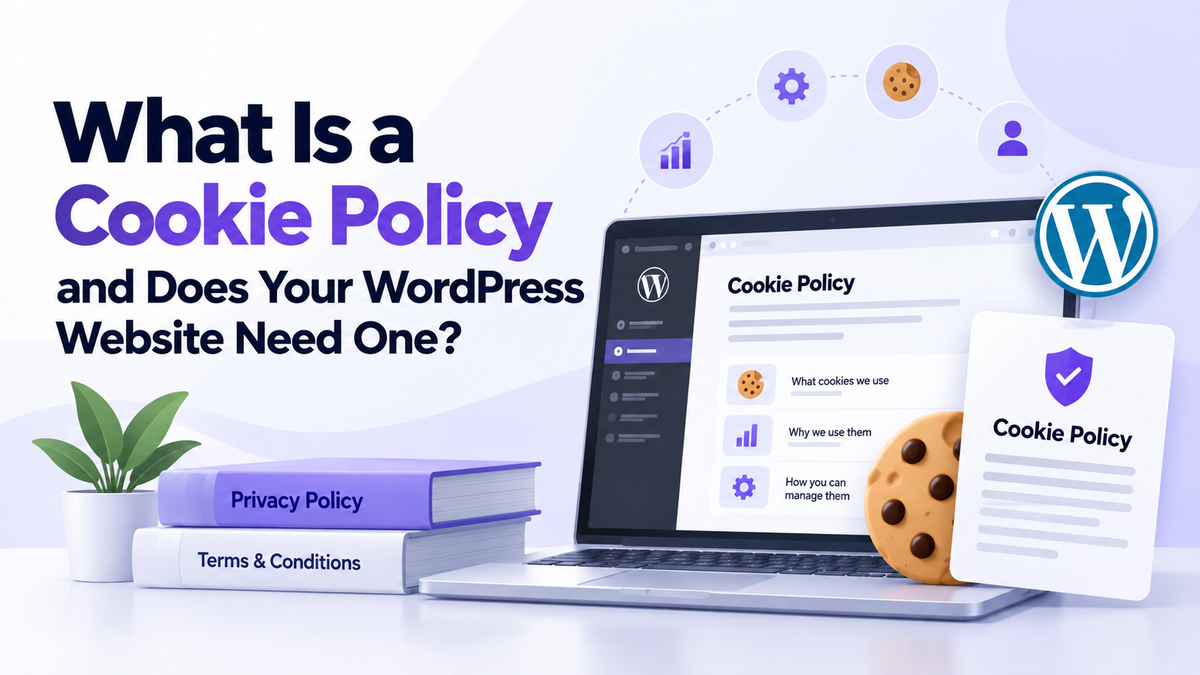
A Cookie Policy explains how a website uses cookies and similar technologies for functions like login sessions, analytics, preferences, and advertising. WordPress plugins and third-party services may also place cookies on visitors’ devices. Since some cookies may require consent, website owners should understand and clearly explain their cookie usage.
In this guide, we’ll explain what a Cookie Policy is, why your WordPress website may need one, what it should include, and how to create one using Legal Pages.
What Is a Cookie Policy?
A Cookie Policy is a page that explains how your website uses cookies and similar technologies.
A cookie is a small piece of data stored on a visitor’s computer or mobile device when they visit a website. Websites can use cookies for different purposes, such as keeping users logged in, remembering preferences, analyzing traffic, or supporting third-party services. European Commission
A Cookie Policy can explain:
- What cookies are
- Which cookies your website uses
- Why each cookie is used
- Whether cookies are first-party or third-party cookies
- How long cookies remain on a visitor’s device
- Which services or plugins place cookies
- How visitors can manage or withdraw their cookie preferences
For example, a WordPress website may use cookies for:
Essential functions:
Login sessions, security, shopping carts, or other features required for the website to work.
Analytics:
Tools that measure visits, traffic sources, or how visitors interact with the website.
Preferences:
Cookies that remember settings such as language or user preferences.
Advertising and tracking:
Cookies used by advertising or marketing services to understand browsing activity or deliver targeted content.
The exact cookies used will depend on your WordPress theme, plugins, integrations, and other services connected to your website.
Why Does Your WordPress Website Need a Cookie Policy?
There is no single Cookie Policy that works for every website. The need for specific disclosures or consent depends on the cookies your website uses, the data involved, and the laws that apply to your visitors.
For websites serving visitors in the EU or EEA, cookies can be subject to both GDPR and the ePrivacy rules. The EDPB explains that consent is generally required for storing or accessing cookies unless they are technically necessary. European Data Protection Board
A clear Cookie Policy can help you:
Explain How Your Website Uses Cookies
Visitors should be able to understand what happens when cookies are used on your website.
For example, if you use an analytics service, your Cookie Policy can explain that certain cookies are used to measure website activity.
Provide Information About Third-Party Services
Your WordPress website may use services such as analytics tools, video platforms, maps, advertising networks, or social media integrations.
These services may place their own cookies. The European Commission, for example, explains that third-party services embedded on its websites can use their own cookies.
Support Transparency
A Cookie Policy gives visitors a clear place to find information about the technologies used on your website.
This becomes especially useful when your website uses several plugins and third-party services.
Help Manage Cookie Preferences
A Cookie Policy can work alongside a cookie consent mechanism that allows visitors to make choices about non-essential cookies.
The EDPB’s own website explains that visitors can choose whether to allow non-essential analytics cookies and can later withdraw or change their choice.
Key Cookie Policy Considerations for WordPress Websites
Before creating a Cookie Policy, it is useful to understand what your website is actually using.
1. Check Your WordPress Plugins
Plugins can add cookies without you manually creating them.
For example, your website might have plugins for:
- Analytics
- Contact forms
- E-commerce
- Memberships
- Social media
- Advertising
- Security
- Caching
- User login
Review the documentation and settings of important plugins to understand what cookies they use.
2. Identify First-Party and Third-Party Cookies
First-party cookies are placed by the website a visitor is visiting.
Third-party cookies can be placed by external services integrated into the website. The European Commission describes both types and notes that third-party services can set their own cookies. European Commission
3. Explain Cookie Purposes
Simply listing cookie names is not very useful to visitors.
Your Cookie Policy should explain what each category of cookie does, such as:
- Necessary
- Preferences
- Analytics
- Marketing
- Advertising
The exact categories should match the cookies actually used by your website.
4. Consider Cookie Consent
If your website uses cookies that require consent, your cookie consent system should allow visitors to make a genuine choice.
The European Commission states that consent requests should be clear, specific, informed, and unambiguous. European Commission
The EDPB also explains that valid consent should be freely given, specific, informed, and unambiguous, with a clear affirmative action.
5. Keep Your Policy Updated
Your website can change over time.
Installing a new analytics tool, advertising service, embedded video, or WordPress plugin may introduce new cookies. Your Cookie Policy should therefore be reviewed when your website’s tracking technologies change.
How to Add a Cookie Policy to Your WordPress Website
Creating a Cookie Policy manually can take time, especially if you are not sure how to structure the page.
Legal Pages provides ready-made templates that you can use as a starting point and customize for your website.
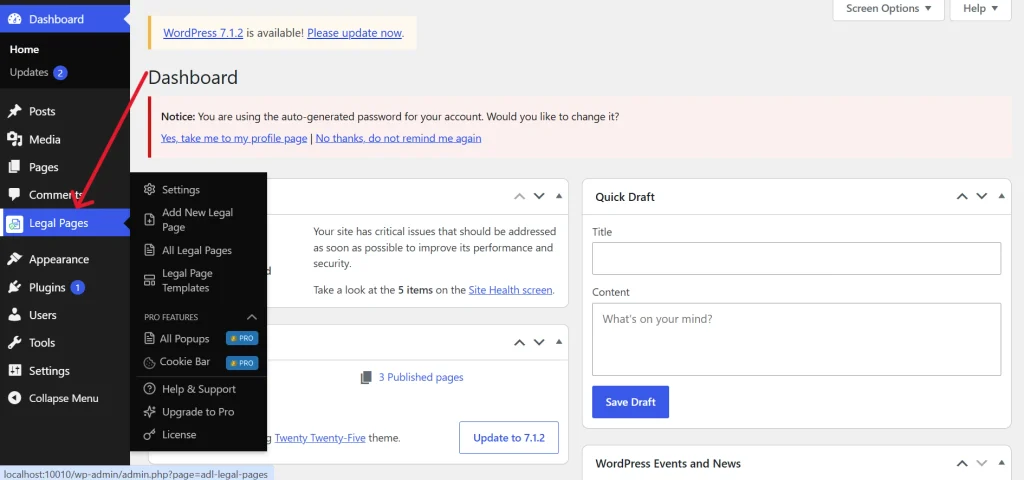
Step 1: Open Legal Pages
From your WordPress dashboard, open Legal Pages and go to the area where you can create a new legal page.
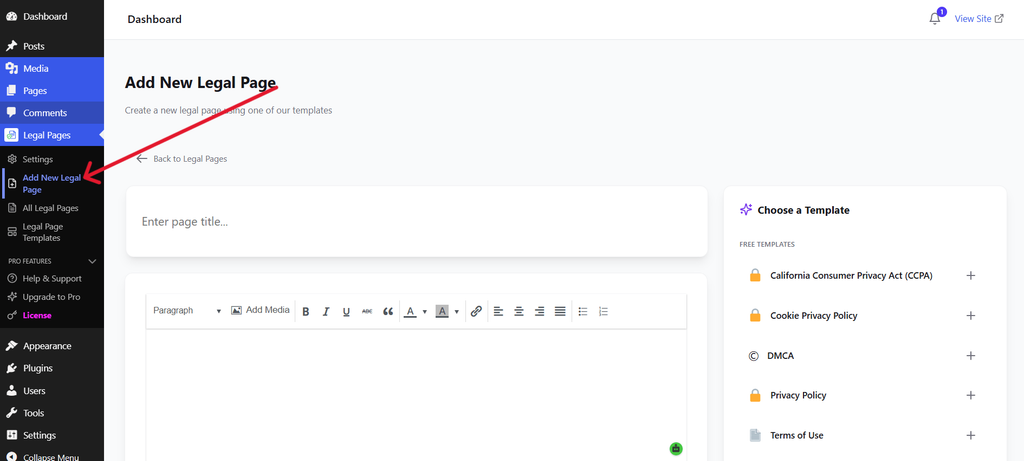
Step 2: Create a New Legal Page
Select the option to create a new legal page.
You can then choose the type of legal document you want to create.
Step 3: Select a Cookie Policy Template
Choose the Cookie Policy option from the available legal page templates.
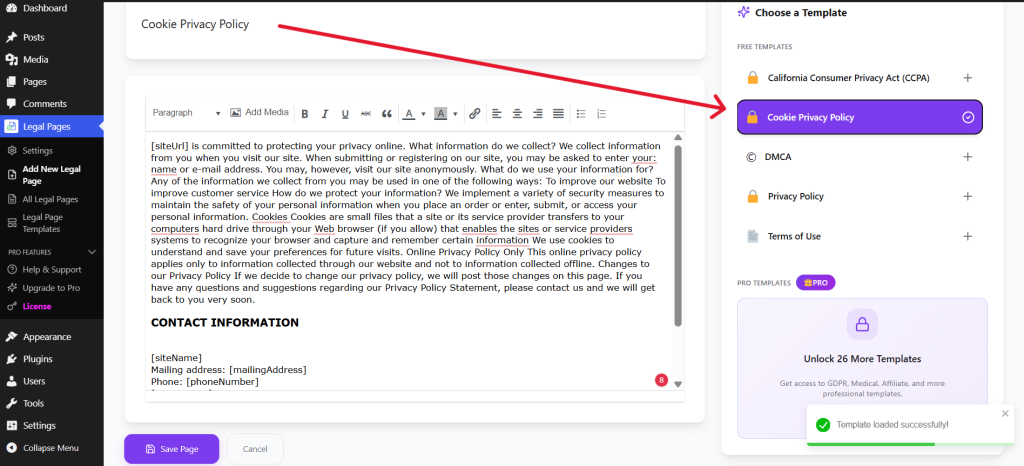
The template gives you a starting structure instead of requiring you to build the document from a blank WordPress page.
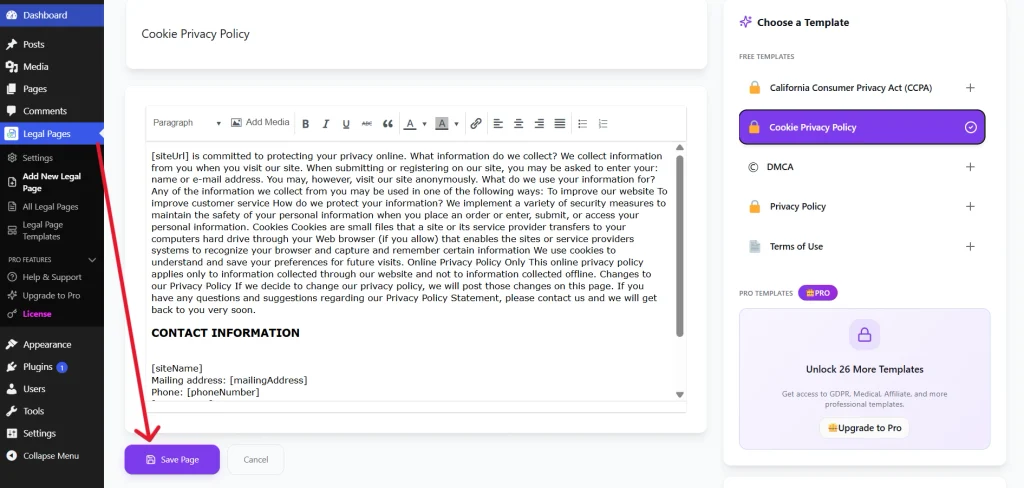
Step 4: Publish the Cookie Policy
Once you have reviewed and customized the content, publish the page.
You can then add the Cookie Policy to an appropriate location on your website, such as the footer, privacy section, or another area where visitors can easily find your legal information.
Important: A Cookie Policy template does not automatically make a website legally compliant. You should make sure the policy matches the cookies and services actually used on your website and consider professional legal advice when necessary.
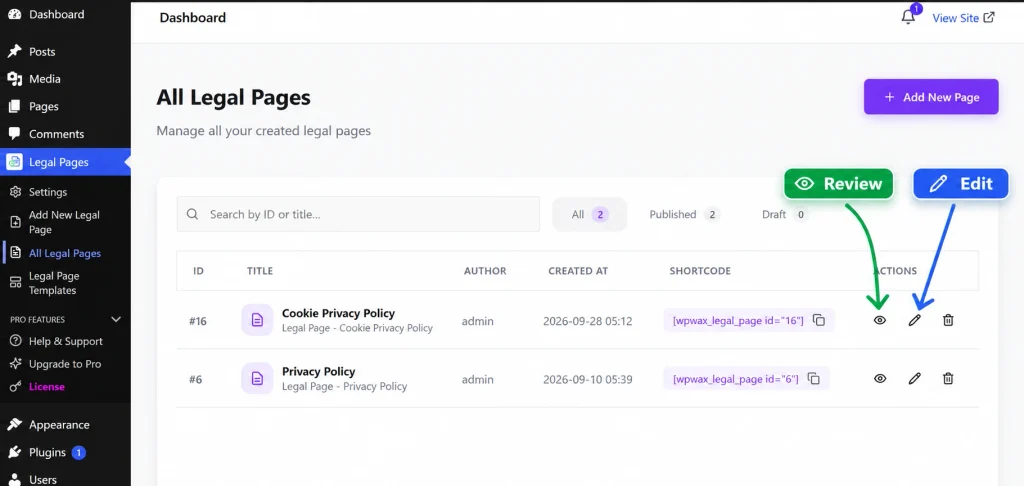
Step 5: Review and Edit the Content
After selecting the template, review the information and customize it for your website.
Pay attention to details such as:
- Website or business name
- Contact information
- Cookies and services used
- Cookie purposes
- Third-party services
- Cookie duration
- Visitor choices and preferences
Do not simply publish a template without reviewing it. Your Cookie Policy should describe your actual website and the technologies you use.
Common Cookie Policy Mistakes to Avoid
Using a Generic Cookie Policy Without Reviewing It
A template is a starting point, not a replacement for reviewing your website’s actual cookie usage.
Forgetting Third-Party Services
Embedded videos, maps, analytics tools, advertising platforms, and social media features can introduce third-party technologies.
Listing Cookies Without Explaining Their Purpose
Visitors should be able to understand why cookies are being used, not just see a list of technical names.
Ignoring Cookie Consent
A Cookie Policy and a cookie consent mechanism serve different purposes. If certain cookies require consent, simply publishing a Cookie Policy does not replace the need for an appropriate consent process.
Not Updating the Policy
Adding or removing plugins and third-party services can change the cookies used by your website. Review the policy whenever these technologies change.
Conclusion
A Cookie Policy helps WordPress website owners explain how their websites use cookies and similar technologies.
Your website may use cookies for essential functions, preferences, analytics, advertising, or third-party services. The exact requirements depend on the cookies you use and the laws that apply to your visitors.
Before publishing a Cookie Policy, identify the cookies used by your WordPress website, understand their purposes, review your consent setup where required, and keep the policy updated.
With Legal Pages, you can start with a ready-made Cookie Policy template, review the content, customize it for your website, and publish it without creating the document from scratch.